New Construction
Should I buy a new build or a resale home on Houston’s south side?
The short answer
Neither is right for everyone. Put one specific new build next to specific resale homes and compare completion stage, inclusions, lot and layout, HOA rules and ongoing costs against condition, location and price, then choose the home that fits your list.
On this page
The answer comes from a side by side list
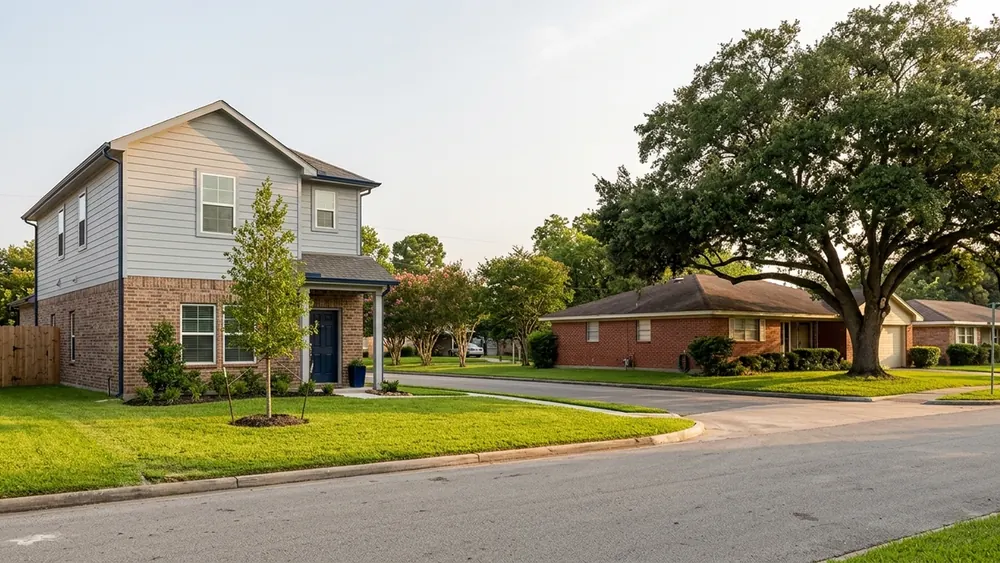
There is no general winner between a new build and a resale home on Houston’s south side. The useful way to decide is to put one specific new home next to two or three specific resale homes and compare them on the same points: completion stage, what the builder includes, lot and layout, HOA rules and ongoing costs on one side, and condition, location and price on the other. The home that fits your list on those points is the one worth pursuing, whatever its age.
This matters because the two purchases work differently. A new build usually comes with a builder, a builder’s contract, a completion schedule and a set of included features that you confirm in writing. A resale home comes with a seller, a seller’s disclosure, years of history and a condition you inspect as it stands today. Different paperwork means different questions, and different people answer them. Knowing that before you tour saves a lot of second guessing later.
Mardis has worked both sides of new construction in a newer builder subdivision on Houston’s south side, on a buyer-side purchase and on shared listing work. That is why this page starts with the comparison instead of a verdict. The goal here is not to talk you into a new home or out of one. It is to help you see what you are actually comparing, so the decision rests on your own priorities rather than on a model home or a first impression.
What a new build puts on the table
A newly built home can look finished in photos long before it is finished in fact. Before you compare it with anything else, pin down exactly what you would be buying and when. Builders handle these details in different ways, so treat every point below as a question for the builder and the builder’s contract rather than an assumption. Write the answers down, with the date and who gave them, so you can compare them fairly against the resale homes on your list.
- The completion stage today and the expected completion timing in writing
- Which features are standard and which are upgrades with added cost
- The lot, the layout and how the home sits on the street
- The HOA rules, dues and any special taxing district that applies
What a resale home asks you to check
A resale home is easier to see and harder to read. You can walk through the actual rooms you would live in, but the home has a past, and part of your job is learning about it. The list below covers the main points to line up for each resale home you compare, so you are weighing the same kinds of facts on both sides. Each one points to a source that gives the official answer, not to a guess.
- The seller’s disclosure and what it says about condition and history
- What a licensed home inspector finds during a full inspection
- Official flood information and FEMA flood maps for that address
- Property tax records from the county appraisal district
- HOA documents, if the home sits inside an association
Costs that never appear in the asking price
The list price is only one line in the comparison. A new build and a resale home can carry very different costs once you own them, and those costs are easy to miss when you are focused on the price. HOA dues, property taxes, insurance and the cost of finishing or repairing things all belong on your list. None of them can be estimated from a listing alone, and they vary from one home to the next, so each one needs a real answer.
On a new build, ask whether a special taxing district applies and how it affects your tax bill, then confirm it with the title company and the county appraisal district. Ask the builder which items are included and which are not, such as window coverings, fencing or landscaping. On a resale home, ask about the age and condition of the major systems, and let the inspection report shape your list of likely repairs. An insurance agent can quote coverage for each specific address.
Once you have those answers, put them in one place for every home you are considering. A simple table with the price, the ongoing costs you have confirmed and the work each home will need gives you a far clearer picture than the listing price alone. It also shows you which questions are still open. A comparison with blanks in it is not finished, and it is worth waiting until the blanks are filled before you commit.
Timing and how certain each option is
Timing is one of the biggest practical differences. A resale home closes on the dates written into the contract, and you know what you are getting on the day you sign. A new build may be complete and ready, or it may be weeks or months from finished, and completion dates can move. If you are also selling, renting or working around a lease, that difference can matter more than any feature on the list.
Talk to a lender early about how each option fits your timing, especially if the new build has a completion date that is not yet firm. Ask the builder how completion timing is communicated and what the contract says if it changes. For either kind of home, ask whether an independent inspection is allowed and when it can happen. A licensed home inspector can look at a new build as well as a resale home, and many buyers find it worth asking.
I would rather you compare two real homes side by side than pick new or resale on a feeling. Once the list is written down, the decision usually gets clearer.
Who answers each question for you
Part of comparing well is knowing who gives the official answer. The builder and the builder’s contract answer questions about inclusions, completion and warranty paperwork. The title company and the county appraisal district answer questions about taxes and special districts. Official flood information, FEMA flood maps and the seller’s disclosure cover flooding questions. A licensed home inspector speaks to condition, an insurance agent to coverage, a lender to financing and a real estate attorney to the contract itself.
Representation belongs on the list too. The builder’s sales staff and listing agents represent the builder or the seller. Having your own agent means someone is focused on your side of the comparison, the contract steps and the questions to ask. On a new build, ask how the builder handles outside agents before your first visit, because some builders want your agent named at that first visit. Confirm the terms in writing before you sign anything.
What to write down before you start
Before a first conversation, write down the basics that will shape every comparison. Note your commute and the parts of Houston that fit it, the price range a lender has helped you confirm, and whether you want new construction, resale or both. Add your timing: when you need to move, and whether you are selling a home or ending a lease. These few lines turn a broad question into a short, practical search.
Then list your must haves and your nice to haves separately. A new build might win on layout and lose on lot, or a resale home might win on location and need work. Seeing which points you will not bend on makes the trade offs visible. If you have already toured a model home or a resale property, write down what you liked and what gave you pause. Those notes are often the most useful part of the list.
When you have that list, bring it to Mardis, who has held a Texas real estate license since 2005 and can help you line up the new and resale homes that fit it in Houston and the surrounding areas. There is no need to have every answer first. The point of a first conversation is to sort out what to verify, in what order, and who else to call. Which two homes would you put side by side first?
This article is general information about buying and selling homes in Houston, Texas. It is not legal, tax, lending, insurance, inspection or valuation advice and does not predict prices or promise results. Confirm builder terms with the builder and the contract, city limits and school assignment with the city and school district, taxes and special districts with the appraisal district, flood information with official sources, contracts with a real estate attorney, and financing with a lender. Mardis Ventura, SERHANT. Equal Housing Opportunity.

Written by